The Near-Shoring Mandate: Building a Resilient, Two-Tier Workforce for 2026
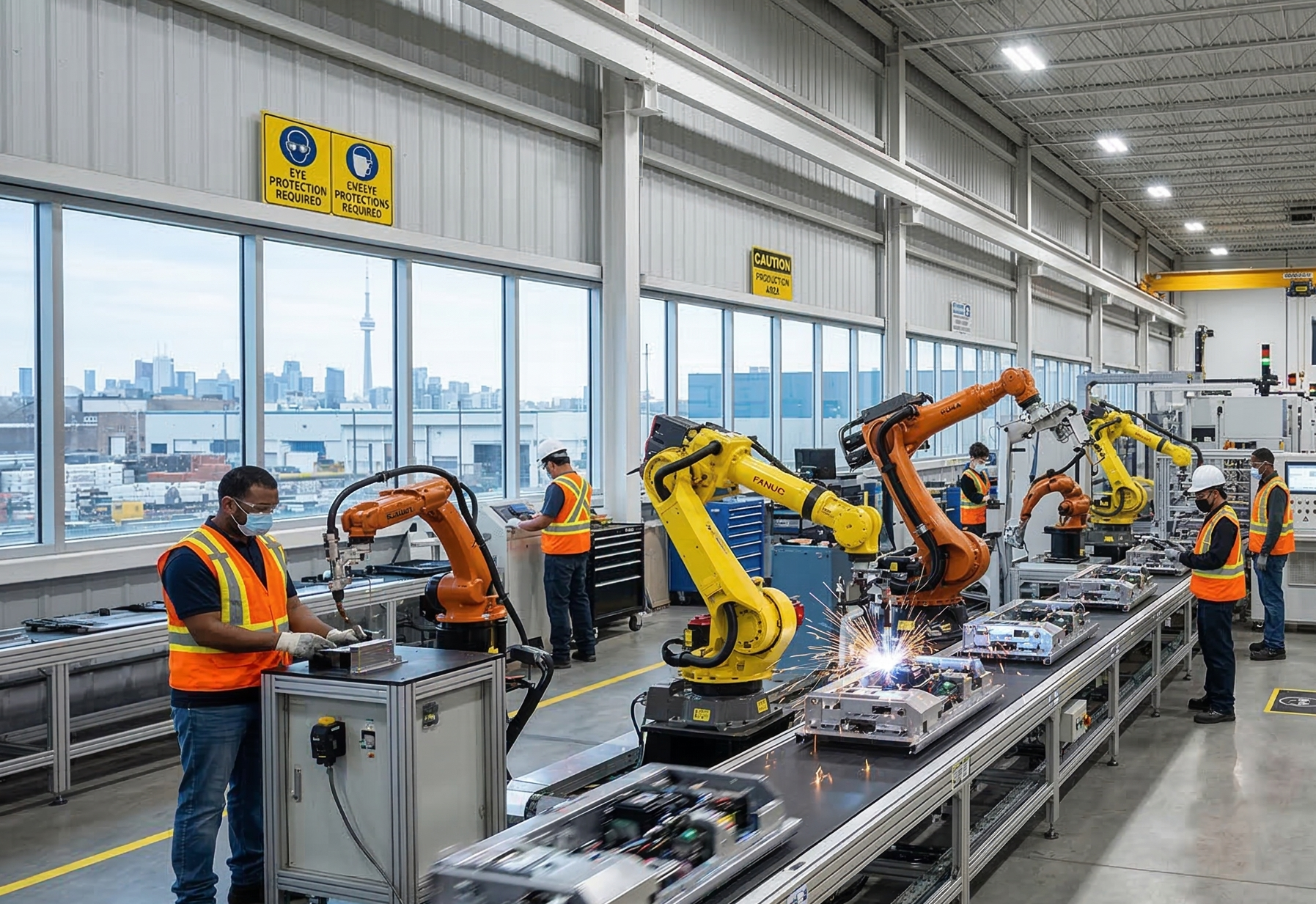
For manufacturers and logistics hubs in Mississauga, Brampton, Vaughan and Toronto, the defining strategy of 2026 is no longer "Just-in-Time" - it is "Just-in-Case."
As global trade volatility, fluctuating tariffs, and new CUSMA (USMCA) review pressures reshape the landscape, the era of relying on hyper-extended, "fragile" supply chains is ending. According to recent 2026 industry data (e.g., DHL Trend Radar), 73% of North American manufacturers are currently in the process of regionalizing or near-shoring their operations.
The Goal: To build supply chains that are shorter, faster, and less vulnerable to global shocks.
The Missing Link in Near-Shoring Strategy
While executives are busy relocating production lines to the GTA, many are overlooking the most critical component of a resilient supply chain: The Workforce.
A short, localized supply chain is useless if your labor force is rigid, slow to scale, and burdened by fixed costs. To truly capitalize on near-shoring, your facility must adopt a "Two-Tier Workforce Strategy" designed for 2026 agility.
What is a Two-Tier Workforce?
A two-tier model is the foundation of operational resilience. It is not about replacing your team; it is about creating a symbiotic relationship between your core and variable staff.
- Tier 1: The Permanent Core: These are your supervisors, skilled technicians, and high-tenure staff. They hold your company's institutional knowledge and safety culture. They are your fixed cost "foundation."
- Tier 2: The On-Demand Variable Layer: This is your "Liquid Workforce." This layer provides the flexibility to meet the inevitable surges, seasonal shifts, and sudden growth scenarios that near-shoring attracts.
Converting Fixed Costs into a Strategic Asset
In a volatile market, the inability to control labor costs is the number one cause of operational drag.
At Alliance Employment Services, we partner with manufacturers along the 407-corridor to design and manage this Tier 2 layer. Our resilience solutions allow you to:
- 🚀 Scale Headcount in Days, Not Weeks: Near-shoring often brings unexpected new contracts. We maintain a pre-vetted pool of local general and technical labor ready to fill a shift immediately.
- 📉 Shift Fixed Overhead to Variable Cost: Instead of hiring permanent staff for a 3-month contract surge, you leverage Alliance. This keeps your P&L lean, protecting your margins when the surge inevitably subsides.
- 📍 Hire for Proximity and Punctuality: Commute-related absenteeism is a primary driver of operational delay. We focus our recruitment on candidates living in and around where the customer is located ( Mississauga, Brampton, Toronto, etc) minimizing logistical risk for your facility.
Don't Let Your Workforce Be a Bottleneck
The transition to near-shoring is a complex operational puzzle. Your staffing strategy must solve that puzzle, not complicate it. By partnering with a local expert like Alliance, you ensure your near-shoring investment delivers the promised resilience, speed, and profitability.
📊 Spring 2026 Supply Chain Resilience Audit
How agile is your current staffing model? If you answer "no" to two or more of these questions, your labor strategy is a risk factor.
- [ ] Can you scale your floor team by 20% within 48 hours to meet a new client rush?
- [ ] Is your HR team fully prepared for the administrative burden of the new 2026 Job Posting Disclosure laws?
- [ ] If a major trade partner changes their tariff structure, can you immediately reduce your labor overhead without layoffs or severance costs?
- [ ] Are 95% of your Tier 2 workers recruited from within a 20km radius of your facility to minimize commute-related delay?
Optimize your facility for 2026 resilience.
Contact Alliance Employment Services today for a consultation on building a compliant, "Liquid Workforce" for your GTA operation.